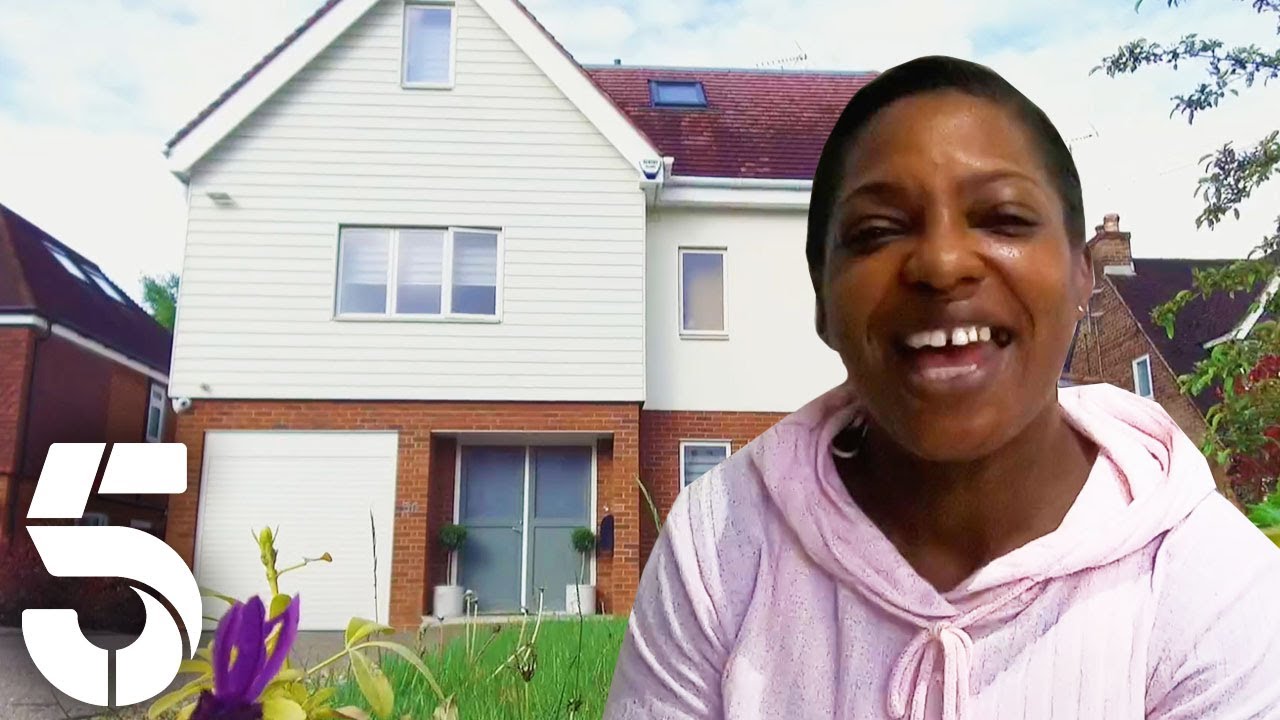
Is Rich House Poor House On Tonight? Unpacking the Enduring Appeal of a Groundbreaking Social Experiment
For viewers wondering, "Is Rich House Poor House on tonight?", the show continues to be a captivating exploration of financial disparity and human resilience. Rich House Poor House, a powerful series often featured on Channel 5, consistently delivers an insightful, emotional, and often surprising look into the lives of two families from opposite ends of the UK's income spectrum. This unique social experiment challenges participants to swap homes, budgets, and lifestyles for a week, forcing them to confront preconceptions and experience realities vastly different from their own. The show doesn't just entertain; it sparks vital conversations about wealth, poverty, and the true cost of living in modern Britain.
At its heart, the series asks a profound question: can money truly buy happiness? By placing families earning in the lowest 10 per cent of the UK income bracket into the opulent surroundings of those in the highest 10 per cent, and vice-versa, the programme reveals the often stark, sometimes humorous, but always deeply human differences that arise from financial circumstances. It's a testament to the show's format that each episode leaves a lasting impression, revealing not just economic contrasts but also the shared values, struggles, and aspirations that connect us all, regardless of our bank balance. For more in-depth discussions on specific episodes and themes, you might want to explore Is Rich House Poor House On Tonight - Article 1.
The Unvarnished Reality: Stories from the Frontline of Financial Struggle
The "poor house" side of the swap often provides some of the most poignant moments of Rich House Poor House. These families typically live with incredibly tight budgets, where every penny is accounted for and luxuries are virtually non-existent. Their stories highlight the immense pressure and constant mental arithmetic involved in making ends meet.
Consider the story of Skye Walker, a single mother of three children – Kareem, Ashani, and Riahiema. Working cleaning jobs, Skye manages to stretch her earnings as far as possible, often left with a mere £170 a week after essential bills are covered. Her world revolves around finding free activities in Lewisham to keep her children entertained, a common reality for many struggling families. Skye's situation isn't just about the numbers; it's about the pervasive stress of scarcity, the constant compromise, and the silent sacrifices made to ensure her children have what they need.
Similarly, we've seen the challenging circumstances of Geri, another single mum, who, alongside her teenage daughter Scarlett, subsists on an incredibly meagre £57 a week after bills. Geri works part-time as a nursery cook while also caring for her elderly father, whom she supports. Her life is a testament to resilience, having moved house eight times since her divorce and even experiencing homelessness. Geri's efforts to create a welcoming home by upcycling furniture or her aspirations to open a cafe and florist business, speak volumes about the human spirit's desire for dignity and progress, even when caught in what she describes as "a trap" of minimum wage living.
These narratives offer crucial insights:
- Resourcefulness: Families like Skye's and Geri's demonstrate incredible ingenuity in managing limited resources, from finding free entertainment to upcycling furniture.
- Invisible Labour: The emotional and logistical burden of constant budgeting, penny-pinching, and planning for every eventuality is often overlooked but incredibly taxing.
- The Dream of Escape: Despite the daily grind, there's often a strong desire for betterment, whether through starting a business (Skye) or pursuing entrepreneurial dreams (Geri), highlighting a deep-seated hope for a better future for their children.
For anyone facing similar challenges, connecting with local community resources, seeking advice on budgeting apps, and exploring free educational courses can be valuable first steps towards gaining more financial control.
Stepping into Luxury: The 'Rich House' Experience and Its Revelations
When families accustomed to tight budgets step into the world of affluence, the contrast is often breathtaking. For Skye and her children, swapping with the wealthy Sethard-Wrights in Bromley meant entering a £4 million mansion boasting an indoor swimming pool. Her children enjoyed private swimming lessons, did homework on a brand new computer, and received private maths tuition – experiences that were previously unimaginable.
The wealthy families, in turn, are confronted with the stark reality of life on a significantly reduced budget. Businesswoman Belinda Sethard-Wright, accustomed to a £1,600 weekly household budget, found herself in a panic when forced to manage with Skye's £170. The realisation that their money would run out by Friday was an "eye-opening" experience that shattered their perceptions of financial ease.
Similarly, millionaire businesswoman Debi Clarke, who lives in an 18th-century farmhouse with four acres of land and owns a glam villa in Spain, usually splurges up to £1,500 a week. Stepping into Geri's shoes, with just £57, undoubtedly provided a profound shock and a deeper understanding of the daily challenges faced by those less fortunate.
These moments are critical because they:
- Humanise Wealth: While the opulent settings are striking, the wealthy participants are often depicted as genuine individuals who, despite their privilege, can be deeply affected by the experience.
- Expose the Illusion of Ease: The panic felt by the rich families trying to live on a fraction of their usual budget vividly illustrates that managing severe scarcity is far from simple; it requires constant strategic thinking and sacrifice.
- Highlight Opportunity vs. Struggle: The access to education, leisure, and stress-free living afforded by wealth is starkly contrasted with the constant grind and limited options faced by low-income families.
It's also worth noting that many wealthy participants, like Belinda (who grew up on a council estate) and Debi (who left school with no qualifications and worked "hundreds of jobs"), often climbed the ladder from humble beginnings. This adds another layer to the narrative, showcasing that financial success isn't always inherited, but the mechanisms to achieve it can be vastly different for each generation.
Beyond the Swap: Lessons Learned and Lasting Impact
The true power of Rich House Poor House lies not just in the initial shock of the swap, but in the profound personal transformations and lessons learned by the participants. The emotional fallout often lasts long after the cameras stop rolling.
For Skye, her week in the Sethard-Wrights' mansion wasn't just about luxury; it was an affirmation of what was possible. The experience solidified her resolve to start her own business, driven by a powerful desire to give her children a "happier life." This isn't merely about more money, but about the freedom from constant financial stress and the ability to provide opportunities for her family.
On the other side, Belinda Sethard-Wright's encounter with a straitened lifestyle left her with a "hollow hole" in her chest, a visceral understanding of the hardship Skye endured daily. Her declaration of Skye as a "wonder woman" for her ability to make things work speaks to a deep empathy born from direct experience. Similarly, Debi Clarke, after experiencing Geri's life, was so moved that she became close to tears, offering Geri a "lifeline" – a gesture that goes beyond the show's format and illustrates the potential for genuine human connection and support.
These profound moments underscore several key takeaways:
- Empathy is a Powerful Catalyst: Directly experiencing another's reality, even temporarily, can foster a level of understanding that statistics or news reports simply cannot achieve.
- Inspiration for Change: The show often inspires both the "poor" families to strive for greater financial independence and the "rich" families to reflect on their own lives and potentially contribute to their communities.
- Challenging Stereotypes: It breaks down simplistic notions of "rich" and "poor," revealing the complex individuals and motivations on both sides of the economic divide.
The lasting impact of the show often resides in these personal revelations, reminding us that while circumstances differ, the human desire for security, opportunity, and a fulfilling life is universal. To delve deeper into the psychological aspects of such social experiments, you might find Is Rich House Poor House On Tonight - Article 3 insightful.
Can Money Truly Buy Happiness? Reflecting on the "Rich House Poor House" Ethos
The central question posed by Rich House Poor House — can money buy happiness? — is nuanced. While the show consistently demonstrates that money itself doesn't guarantee contentment, it unequivocally illustrates how a lack of it can profoundly impede well-being and create immense stress.
Money, as the series vividly shows, buys security, opportunities, and reduces anxiety. For Skye's children, swimming lessons and private tuition aren't just luxuries; they are potential pathways to development and future success. For Geri, the dream of a cafe and florist shop represents not just income, but purpose and self-sufficiency. These aspirations are significantly easier to pursue with financial stability.
However, the show also subtly suggests that true happiness encompasses more than just financial wealth. The resilience, strong family bonds, and community spirit often evident in the "poor house" families highlight invaluable qualities that money cannot directly purchase. The "hollow hole" Belinda felt, despite her wealth, indicates that even extreme affluence doesn't guarantee emotional fulfillment. What money *does* provide is the freedom to pursue those things that contribute to happiness: time with family, education, personal growth, health, and a sense of purpose without the constant burden of financial fear.
Ultimately, Rich House Poor House reminds us that while money is a critical tool for navigating the modern world and opening doors, it is the choices we make, the relationships we foster, and the empathy we extend that truly define a rich life, regardless of our bank balance.
Whether you're curious about a specific episode or generally asking, "Is Rich House Poor House on tonight?", the show remains a relevant and thought-provoking fixture in reality television. Its ability to peel back the layers of societal assumptions and reveal the human stories behind economic data ensures its continued importance. By fostering empathy and understanding across the income divide, Rich House Poor House serves as a powerful reminder of our shared humanity and the profound impact of financial circumstances on every aspect of life.